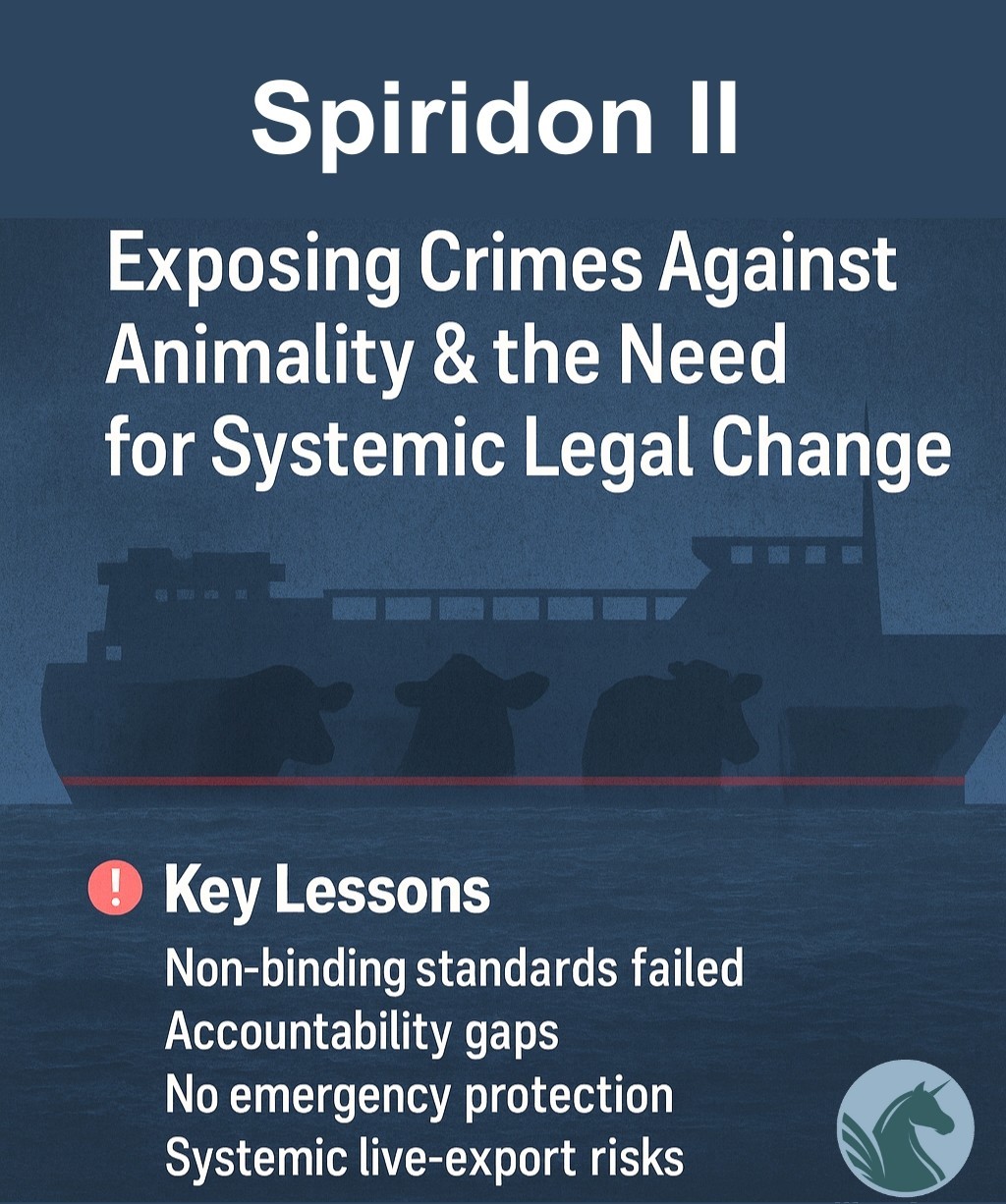

 SPIRIDON II: The Ship of Horror Exposing Crimes Against Animality & The Need for Systemic Change
The SPIRIDON II tragedy is another stark example of the crimes against animality that must be internationally banned — and of the urgent need to transform the current food system that allows such horrendous situations, with billions of animals legally suffering and dying in terrible conditions worldwide.
This tragedy should serve as a wake-up call — not only for governments and international bodies, but also for all of us engaged in animal protection, law, and policy. It raises profound questions:
How could this happen? Why did no authority intervene? And what does this reveal about the global food system and its legal gaps?
What Happened Aboard the SPIRIDON II?
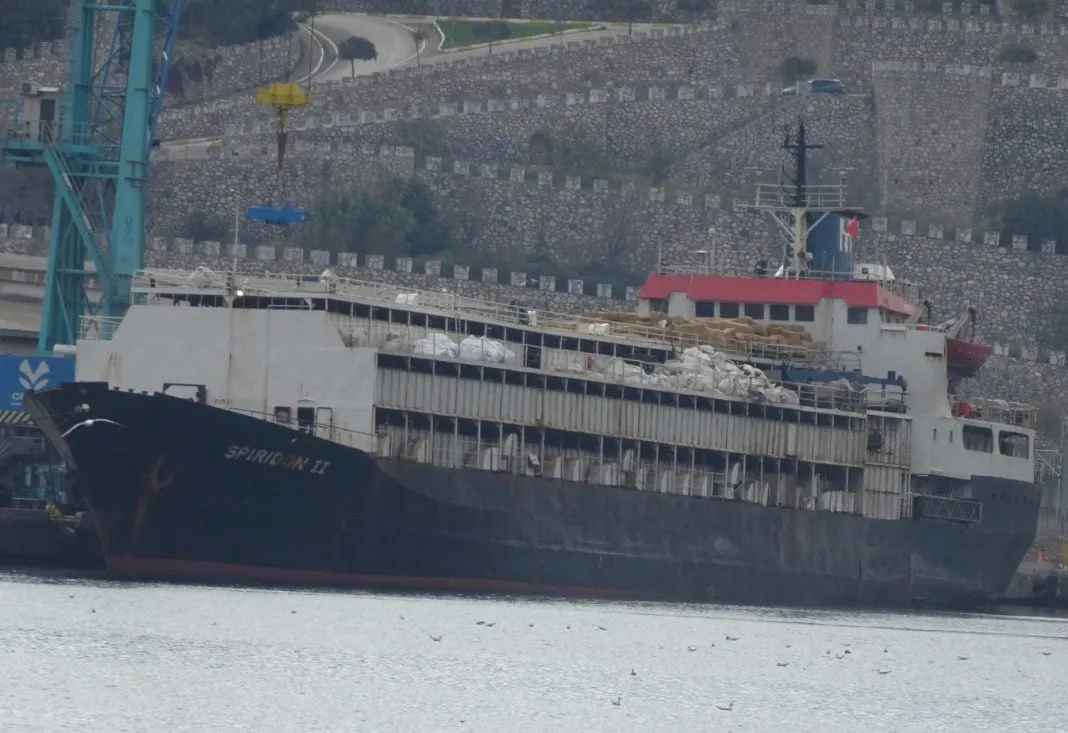
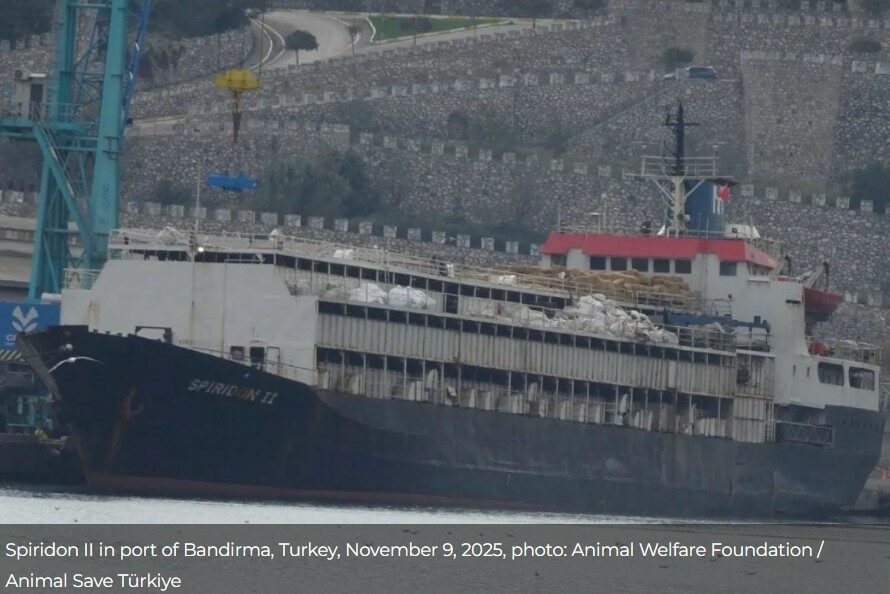
On 20 September 2025, approximately 2,900 cattle, about half of them pregnant, departed Montevideo, Uruguay, aboard the live-export vessel Spiridon II. After more than a month at sea, the ship reached Bandırma, Türkiye, on 22 October, but authorities refused to unload the animals due to missing documents related to part of the shipment.
The vessel was then forced to remain offshore for weeks as conditions deteriorated drastically. Several investigations (AWF, CIWF, and others) documented:
- Deaths of cattle onboard, including unweaned calves
- Abortions among unlawfully loaded pregnant females
- Severe shortages of feed and water
- Insufficient veterinary care
- Decomposing carcasses posing sanitary and biosecurity risks
- Extreme and prolonged suffering due to heat, confinement, and stress
After more than two months at sea, and according to information obtained from WOAH-related sources, the surviving animals were partially unloaded in Benghazi, Libya, on 24 November 2025, with the vessel then continuing toward Beirut, Lebanon, where the remaining animals were expected to be unloaded upon arrival on 27 November.
While this ended the immediate emergency at sea, it does not erase the unprecedented suffering the animals endured.
Nor does it resolve the many critical questions that remain unanswered, as no official communication has yet provided clarity on them.
What Does International Law Require?
International animal transports by sea are regulated by the World Organisation for Animal Health (WOAH), providing clear requirements under its Terrestrial Animal Health Code, particularly Chapter 7.2 on Transport of Animals by Sea. This includes:
- Art. 7.2.3 – responsibilities to ensure proper care, monitoring, and prevention of suffering
- Art. 7.2.5 – proper planning, sufficient feed and water, veterinary oversight, and emergency measures
- Art. 7.2.9 – daily monitoring and treatment of sick or injured animals
- Art. 7.2.10 – prompt unloading and access to feed, water, and veterinary care upon arrival
- Art. 7.2.11 – mandatory responsibilities for importing countries that refuse unloading, and activation of WOAH’s mediation procedure
Crucially, Article 7.2.11 requires WOAH to activate its informal dispute-mediation mechanism immediately when a country refuses unloading — precisely to prevent animals from being trapped in prolonged suffering.
This tragedy exposes how non-binding animal welfare standards fail in the face of systemic neglect and global commercial pressure, highlighting the dire need for a legally binding international framework on live-animals exports to end such cruelty.
A Failure of the System at Every Level
The SPIRIDON II crisis reveals multiple structural failures:
1. Failure of exporting and importing countries
Uruguay and Türkiye failed to uphold their responsibilities under WOAH standards. Both had legal obligations — neither ensured welfare, proper documentation, nor timely intervention.
2. Failure of international oversight
WOAH, despite having both the mandate and the procedures to act, failed to intervene promptly after Türkiye’s refusal on 22 October. As a result, the animals were forced to endure an extra month offshore in severely deteriorating and unacceptable conditions.
3. Failure of the global food system
This tragedy is not accidental — it is systemic.
A system transporting pregnant cows, young calves, and unweaned animals across oceans for slaughter predictably creates welfare disasters. SPIRIDON II is not a tital exception.
4. Failure of law to protect sentient beings
Despite extreme suffering, no state recognises this as a crime.
But morally — and increasingly legally — it should be recognised as a crime against animality.
Why Are Mainstream Media So Silent? The Structural Invisibility of Institutionalised Cruelty
Despite the scale and gravity of this tragedy, mainstream media have remained remarkably silent.
This silence is not accidental. The SPIRIDON II exposes the uncomfortable truth that the global food system relies on structural, large-scale cruelty — cruelty that is:
- Routine
- Legal
- Hidden from public view
- Enabled by weak international oversight
- Protected by powerful economic interests
It also shows that the supposed “garde-fous” of the international system — including WOAH’s non-binding animal-welfare standards — are neither enforced nor sufficient.
If widely reported, the SPIRIDON II would force society to confront an undeniable reality:
Live-animal exports inherently cause mass suffering, and the current food system depends on practices that cannot withstand public scrutiny— because the truth would force transformation.
Mainstream media silence thus becomes another layer of systemic failure, allowing cruelty to continue in the shadows.
What Should We Learn from the SPIRIDON II Tragedy?
1. Crimes against animality must be internationally recognised
The systematic, large-scale, preventable infliction of suffering on sentient beings must be treated as a crime under international law.
What happened on the SPIRIDON II is not an “incident.”
It is a crime against animality.
2. Live-animal exports by sea must be reconsidered globally
The inherent risks include:
- Long journeys
- Bureaucratic failures
- Sanitary hazards
- Inadequate emergency procedures
- Lack of accountability
SPIRIDON II is part of a decades-documented pattern of repeated tragedies.
3. WOAH must use — and strengthen — its authority
WOAH’s mediation procedure exists precisely to avoid crises like this.
Inaction is not neutral — it causes suffering, death, and profound loss of trust.
4. The food system must change at its core
A system treating sentient animals as disposable commodities will always produce horrors.
Billions of animals suffer legally each year in ways that would shock the public if visible.
SPIRIDON II is a symptom of a food system that needs urgent ethical, legal, and structural transformation.
What Comes Next?
Now that the surviving animals have reportedly been unloaded in Libya, World Animal Justice and our co-signing NGOs call on WOAH to:
- Clarify what steps WOAH took during the crisis, including whether Art. 7.2.11 mediation was activated
- Confirm immediate measures taken for the animals unloaded — veterinary care, feed, water, handling
- Engage directly with the competent authorities of Uruguay, Türkiye, Libya, Liban, and other States
- Strengthen enforcement of Chapter 7.2 and create mandatory emergency-response mechanisms
- Guarantee preventive reforms so no animals ever endure months of suffering due to paperwork failures or political paralysis
The suffering endured aboard the SPIRIDON II must never be repeated.
A Call to the Global Animal-Advocacy Community
As advocates and lawyers, we must see the SPIRIDON II tragedy for what it truly represents: a turning point.
It exposes the deep structural failures of the global food system.
It shows why the legal recognition of crimes against animality is urgently needed.
And it reminds us that without systemic transformation, tragedies like this will continue — quietly, routinely, and legally.
Thank you for standing with us in this fight.
Together, we can push for accountability, meaningful intervention, and lasting change for animals worldwide.
 Read our full joint letter to WOAH below.
Signatory NGOs: World Animal Justice, Droits des Animaux, Animal Equality, Animal Law Reform South Africa, Fundación Derecho y Defensa Animal